
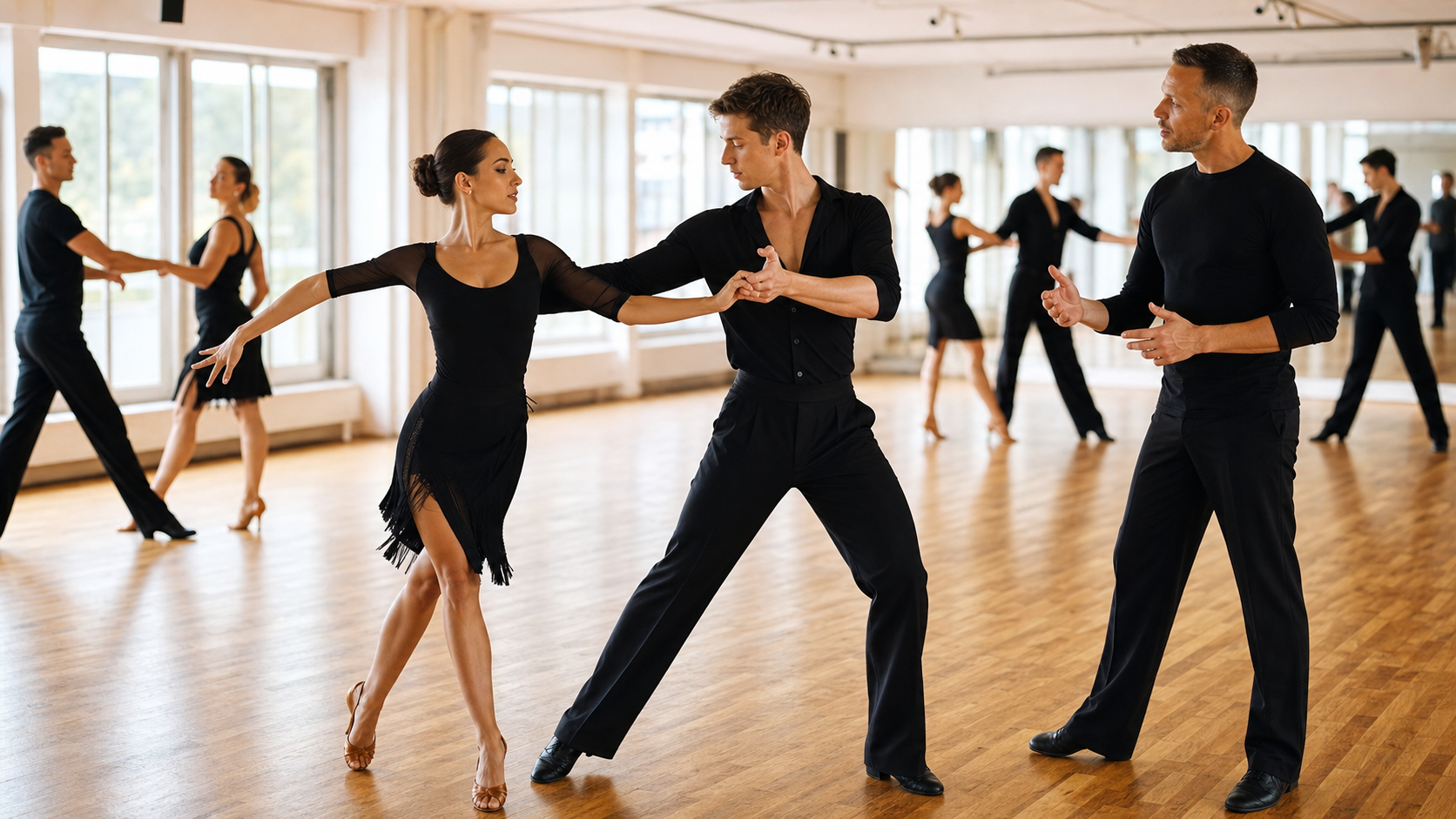
Many dancers are interested in camps but keep waiting.
They think:
- “I am still too much of a beginner.”
- “I should improve before I go.”
- “Dance camps are only for competitive couples.”
But a dance camp is not an exam you must pass.
It is a place to learn.
You do not need to be advanced to join a dance camp. You need to choose a camp that matches your level.
The Best Time to Start Is Earlier Than You Think
There is no rule saying you must train for six months, one year, or five years before attending a camp.
You can start when you:
- know the basic steps of your dance style
- can follow a group class
- can train for a full lesson without feeling completely lost
- are comfortable receiving corrections
- want to learn in a more intensive environment
You do not need perfect technique or a complete competition program.
If you can understand the class and safely attempt the exercises, a beginner-friendly camp can already be useful.
Your Level Matters More Than Your Training History
Two dancers may both have trained for one year and still need very different camps.
One may train once a week for fun. The other may take lessons and practice several times per week.
Instead of asking only, “How long have I been dancing?” ask:
- Can I stay on time with the music?
- Do I understand the main basic figures?
- Can I remember and repeat a short exercise?
- Do I have enough stamina for several classes?
- Is the camp program designed for my level?
The answers tell you more than the number of months on your dance profile.
Choose the Right Camp for Your First Experience
Not every camp is suitable for every dancer.
Some events are open to all levels. Others are built for advanced competitors and assume that participants already know specific technique, terminology, or choreography.
Before registering, check:
- the stated level of the classes
- which dance styles are included
- whether the camp is for couples, solo dancers, or both
- how many classes take place each day
- whether private lessons must be booked separately
- the language used by the coaches
If the level is not clear, contact the organizer. Tell them how long you have danced, how often you train, and whether you compete.
👉 You can find upcoming dance camps on DanceNetwork.
Do You Need a Dance Partner?
It depends on the camp.
At some camps, dancers rotate partners during group classes or complete many exercises individually. These events can be comfortable for solo dancers.
At other camps, most sessions focus on couple technique, choreography, and competition rounds. Attending without a partner may limit what you can do.
Always ask before booking if the event page does not explain the format.
If you are currently searching, you can also find a dance partner on DanceNetwork.
Should You Wait Until You Start Competing?
No.
You do not need competition experience to benefit from a camp.
In fact, attending one before your first competition can help you:
- improve your basics
- understand how experienced dancers train
- become more comfortable dancing around other couples
- learn how to handle longer practice sessions
- prepare mentally for a more serious dance environment
If you already compete, camps can help you prepare for a specific event or build your next program.
But competition is not the entry ticket.
Signs You May Not Be Ready for a Particular Camp
Starting early is valuable, but joining the wrong camp can be frustrating.
You may need a different event if:
- every class is described as advanced or invitation-only
- you do not yet know the basic rhythm of the dances being taught
- the schedule is physically unrealistic for you
- the camp requires a partner and you plan to attend alone
- you are recovering from an injury and cannot train safely
This does not mean you should avoid camps completely.
It means you should find a beginner, open-level, or less intensive option first.
How to Prepare for Your First Dance Camp
A little preparation makes the experience much better.
Build Basic Stamina
Several classes in one day feel very different from one weekly lesson.
In the weeks before the camp, train consistently and include simple conditioning, mobility, and recovery.
Review Your Basics
Do not rush to learn complicated choreography.
Timing, posture, balance, and basic actions will help you follow almost every class more effectively.
Set One or Two Goals
You cannot fix everything in one weekend.
Choose a focus such as:
- better posture
- clearer footwork
- stronger partner connection
- more confidence in group classes
Clear goals help you recognize useful information instead of trying to remember every correction.
Leave Space to Recover
More classes are not always better.
Eat properly, drink water, change clothes when needed, and allow your body to rest. If pain feels unusual, stop and get appropriate help.
What If Everyone Else Is Better?
At your first camp, some dancers probably will be better.
That is normal.
Their level does not reduce the value of your training. Watching experienced dancers can show you what is possible and help you understand corrections more quickly.
Do not try to prove that you belong in the room.
Listen, practice, ask clear questions, and focus on the next improvement you can make.
The goal of your first camp is not to be the best dancer there. It is to leave as a better dancer than you arrived.
Final Thought
Start when you have enough basics to participate — not when you feel perfect.
Choose a camp that welcomes your level, confirm whether you need a partner, and prepare for the physical schedule.
Your first camp may feel challenging.
That is part of its value.
The right camp does not only show you how much you still need to learn. It gives you the coaches, dancers, and environment that can help you learn it faster.
Explore dance camps around the world or find your next dance competition and choose the next step that fits your level.