
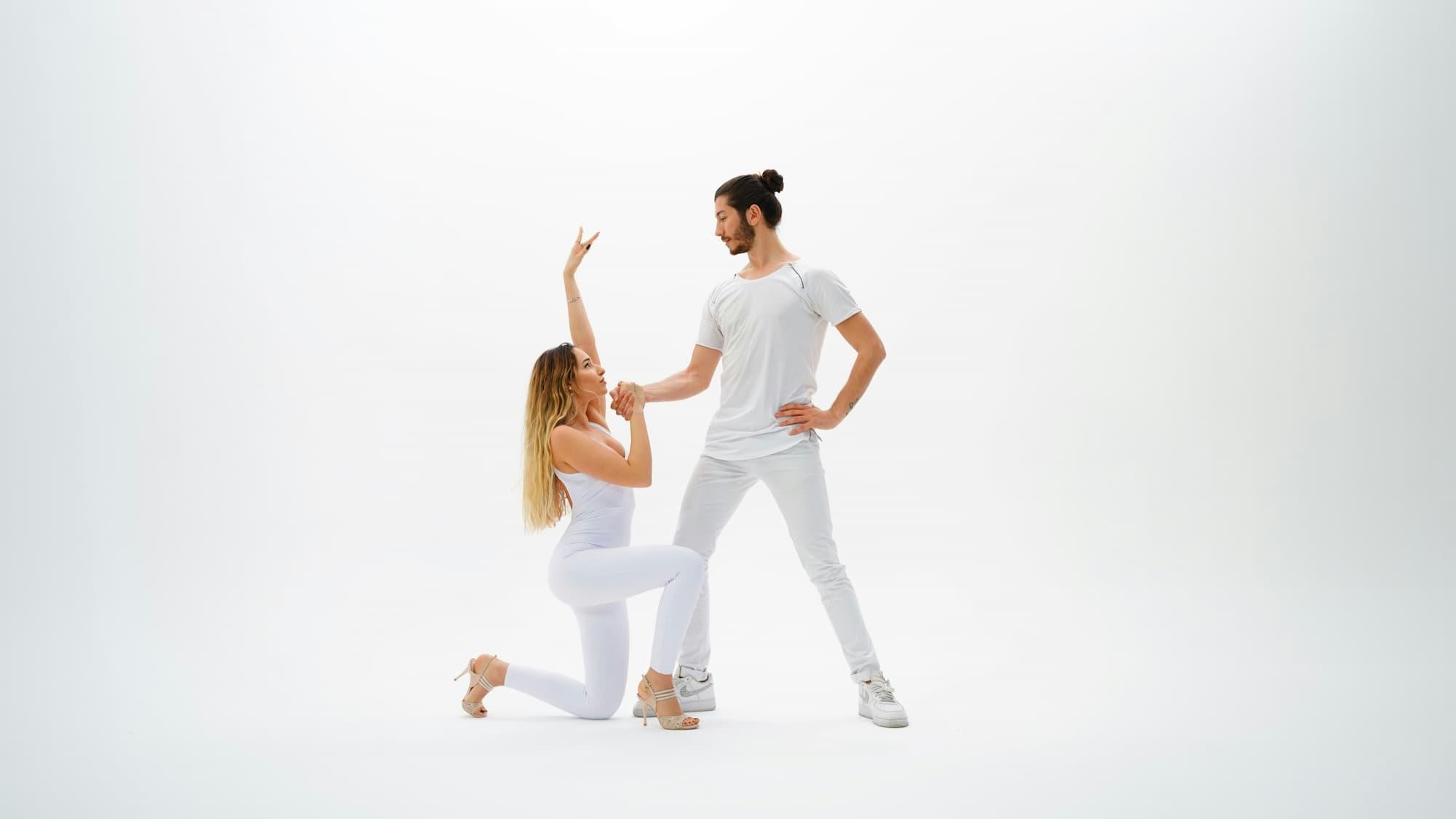
“People meet you by how you present yourself — but they stay for your skills.”
In dance partner tryouts, this is exactly how it works. The first minutes decide if the tryout even continues. Your dancing decides if the partnership continues after that.
That’s why making a strong first impression is not optional — it’s essential.
First Impression Decides the Start
Before you even start dancing, a lot is already being evaluated. The way you walk into the room, how you introduce yourself, how prepared and focused you look — all of this creates an immediate signal.
Clean, well-fitted practice wear, attention to details, and a professional but natural appearance already position you as someone serious. You don’t need expensive outfits, but you do need to look like a dancer who respects the process.
At the same time, people instantly feel your energy. Confidence, openness, and respectful communication matter more than people think. Many tryouts fail before the first step simply because the interaction feels uncomfortable or forced.
There is also a practical layer that cannot be ignored — physical compatibility. Height difference, frame, overall visual balance as a couple. It doesn’t need to be perfect, but it has to feel workable. If something feels off physically, it usually becomes a limitation later.
What Happens During the Tryout
Once you start dancing, the focus shifts quickly. Tryouts are not about showing your best choreography. They are about showing how you function with another person.
Typically, you’ll go through basic figures first, then a few dances from your program — Latin, Standard, or both. What is being tested is not complexity, but clarity.
- Timing and rhythm
- Balance and control
- Lead & follow connection
- Speed of adaptation
Strong dancers don’t try to impress immediately. They listen, adjust, and build connection step by step.
The best tryouts don’t feel like a performance — they feel like a conversation.
Partners are not just evaluating your technique. They are asking themselves: Can I train with this person every day? Can we solve problems together? Does this feel natural or forced?
What Actually Matters to Dancers
It’s easy to think results or titles will decide everything. In reality, they don’t.
Connection is often the deciding factor. How quickly you understand each other, how natural it feels, how easy it is to move together.
Work ethic is just as important. Focus, ability to listen, willingness to adjust — these signals show long-term potential.
And of course, compatibility. Not just height, age, or level, but personality, mindset, and goals.
Many strong dancers fail tryouts because they focus only on themselves instead of the partnership.
How to Prepare Without Overcomplicating
Preparation is not about learning something new right before the tryout. It’s about stabilizing what you already have.
Your basics matter more than anything:
- Clean timing
- Stable posture
- Controlled movement
- Clear lead/follow
Complicated choreography won’t compensate for weak fundamentals.
One of the most effective ways to prepare is dancing with different partners before the tryout. Group classes, social dancing, and practice swaps improve adaptability — and adaptability wins tryouts.
You should also be clear about your own situation. What are your goals? How often can you train? What are you looking for in a partner? Clear answers build trust.
Mentally, it’s important to understand: this is not an exam. It’s a mutual decision.
Mistakes That Ruin Tryouts
There are patterns that repeat again and again.
Overdancing is one of them. Trying too hard to impress often leads to losing control, timing, and connection. Simplicity and clarity are stronger.
Ignoring your partner is another. If you focus only on your own movement, connection disappears immediately.
And trying to hide mistakes. Mistakes happen in every tryout. What matters is how you react — quick recovery and calm adjustment.
What Happens After
Not every tryout leads to a partnership. And that’s normal.
If it works, clarity becomes critical. Expectations, training structure, and goals should be aligned early. Many partnerships fail not because of dancing, but because of mismatched expectations.
If it doesn’t work, it’s still progress. Every tryout gives feedback, even if it’s not spoken. Reflect, adjust, and move forward.
One tryout rarely defines your journey — but each one moves you closer to the right partner.
Where Tryouts Really Begin
Most dancers don’t struggle with tryouts themselves. They struggle with getting the right tryouts.
Opportunities don’t appear randomly. They come from visibility.
Instead of relying only on timing, strong dancers build a presence:
- A clear profile
- Visible dancing
- A way to be found
On platforms like DanceNetwork, your profile becomes your base. It stays visible, searchable, and ready when the right partner is looking.
Because the right tryout only happens when the right people find each other.
Final Thought
A tryout is not about proving you’re perfect.
It’s about showing who you are, how you work with someone else, and whether you can grow together.
And when that clicks — everything changes.